
Holdings
Library
The Library brings together WAN's growing collection of noonomy scholarship in one place.
Collection · 01
Books and Monographs
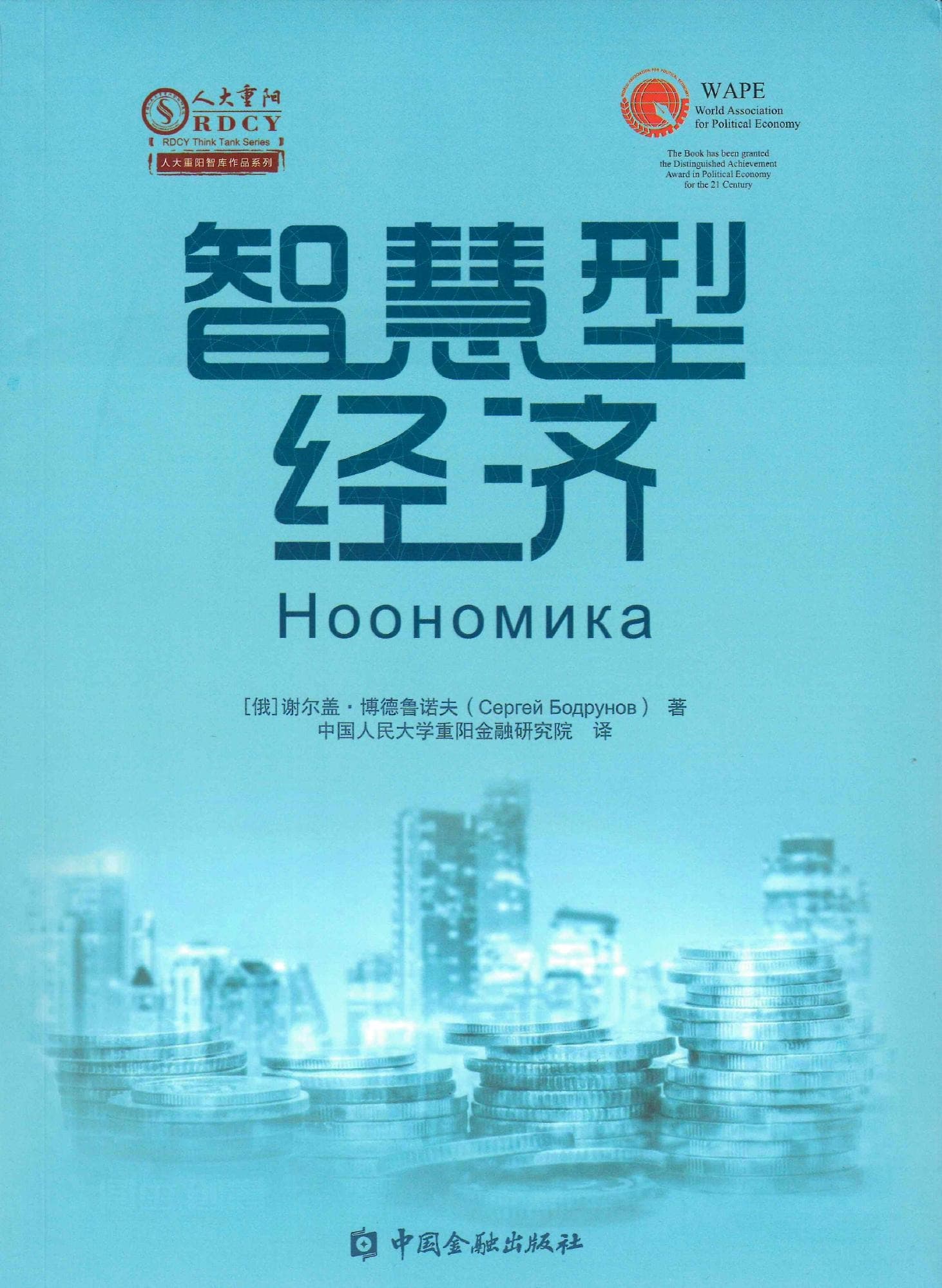
Noonomy. Sergey Bodrunov
Monographs exploring the theory and development of noonomy in the context of the technological revolution. Studies of the transition to a qualitatively new system of economic relations.

















Books on the Theory of Noonomy
Studies that build on and extend the core theory.

 RUFrom an Economic System to a Non-Economic Society. Theory of Noonomy and Practice of Nootransition: Global Experience and Chinese Modernization
 ENRUAnthology of Noonomy: Fourth Technological Revolution and Its Economic, Social and Humanitarian Consequences
 ENRUESHEITStrategizing Societal Transformation: Knowledge, Technologies, and Noonomy
 ENRURegularities of the Noonomy Foundation Formation as Future Social Order: to Know and Operate
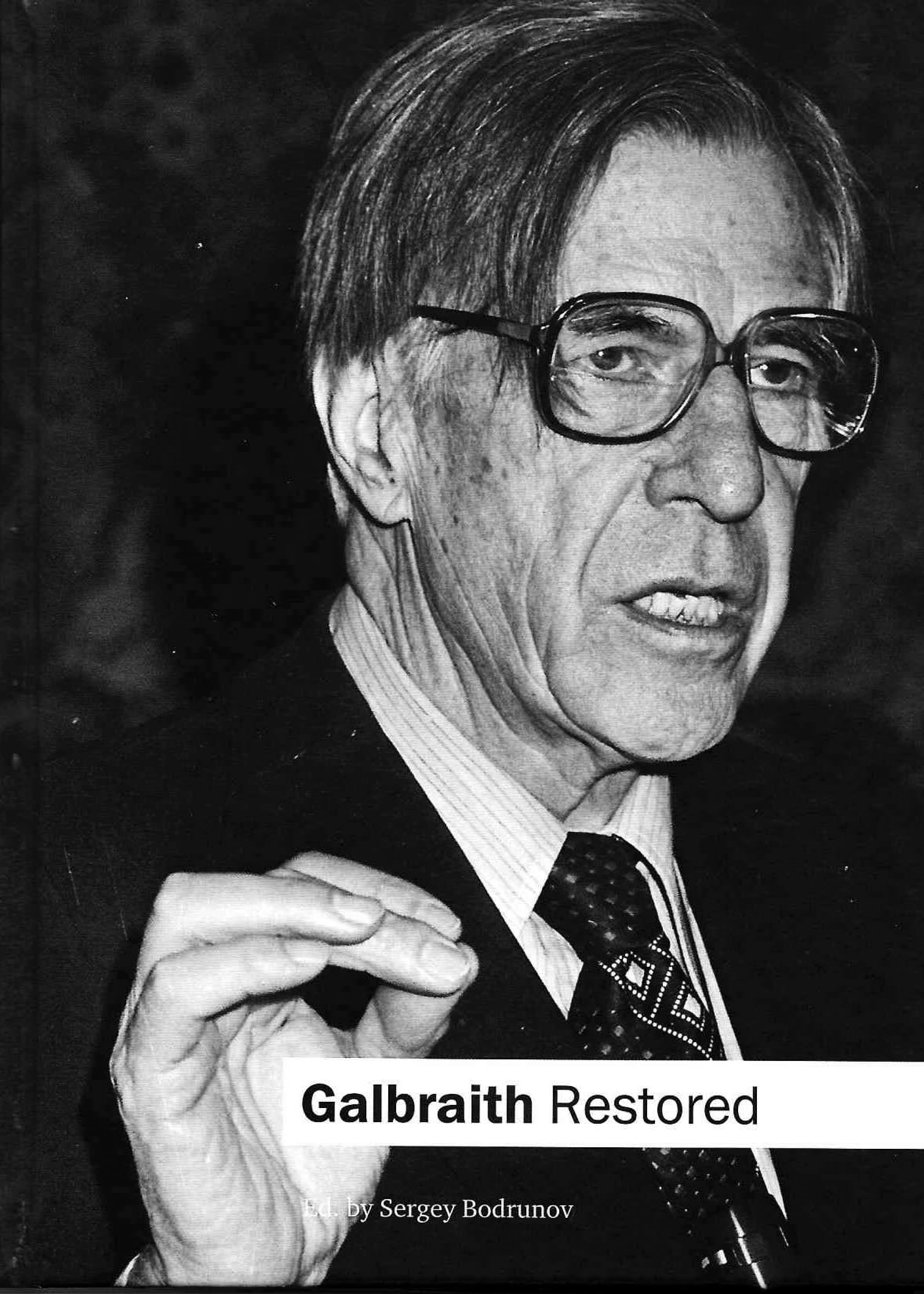 ENRUGalbraith Restored
 ENRUZHThe Coming New Industrial State: Reloaded
General Books
Titles that exist in a single edition, laid out together with online reading available for each.

 RULabor and Transformation of Society: Knowledge, Creativity, Noonomy. Vol. 1
 RULabor and Transformation of Society: Knowledge, Creativity, Noonomy. Vol. 2
 RUGlobal Neoliberal Capitalism and the Alternatives: From Social Democracy to State Capitalisms
 RUInterrogating the Future: Critical Theory in Social Sciences. Essays on David Fasenfest
 ENRUZHPolitical Economy Notebooks
 RURussia in the Context of Global Transformations: Contradictions and Development Potential. Vol. 1
Collection · 02
Scientific Articles
ENNootransition and Sustainable Development: In Search of IntegrationThe crisis of the established civilization model, the "civilization of maximization" leads to an aggravation of economic, social and environmental problems. A nootransition to a new civilizational paradigm is needed, linked to the concept of sustainable development, which is consensual for the world community. The nootransition itself must be carried out within a fairly narrow ecological framework. In these conditions, the knowledge factor, increasing the knowledge intensity of the economy, as well as compliance with the "precautionary principle", are becoming increasingly important. The use of sustainable development indicators is proposed as one of the possible approaches to measuring the success of the nootransition.Read →ENApplication of the Noonomy Principles to Development of Industry and Labor Market in RussiaThe paper considers modern problems of industry and labor market development in Russia. The evolution of needs as a motive for economic activity is compared with the evolution of industrial development. The author highlights the change in the nature of labor and requirements for workers within different technological structures. The state of the labor market in Russia is analyzed in the context of imbalances in economic development. The priority of the spatial factor in the development of industry and the labor market is substantiated. Based on the example of Russian single-industry towns, the question of the need to form an adequate theoretical basis for the spatial development of industry is raised. The expediency of applying the principles of noonomy to solving the problems of developing Russian industry and the labor market is proven, and current and promising areas for applying the nooapproach are substantiated.Read →ENDevelopment of the National Economy in the Context of the New Reality: Towards NoonomyThe article touches upon the problematic field of modern economic science, which gives priority to the development of many private issues of social and economic life and prefers to move away from its general issues, the solution of which allows individuals, organizations and countries to build a picture of the modern world and determine their place in it. Focusing on the modern version of the systemic approach, the study successfully used the possibilities of an interdisciplinary nature, which made it possible to put forward a number of hypotheses related to the consideration of the current stage of development of the economic system through the prism of the “new reality” phenomenon, to expand the traditional horizon of considering many issues related to modernity and the prospects for the development of Russia on the path to Noonomy. In the course of writing the article, the author also used dialectical, historical-logical and evolutionary research methods.Read →ENA Eurasian Axis for a Multilateral Order: Türkiye-Russia-China Cooperation and the Construction of Global StabilityA new international order is emerging. The central issue is no longer whether unipolarity is coming to an end. Rather, the key question is whether the new distribution of power will be organized through military blocs and economic coercion, or through multilateral cooperation among sovereign states. This article expands upon a proposal presented at the St. Petersburg Economic Congress 2026, suggesting that Türkiye, Russia, and China can establish a viable Eurasian axis to construct a stable multilateral order. The term "axis" is used here in its twenty-first-century context, implying neither a closed camp nor a hierarchy dominated by a single power. Instead, it signifies strategic coordination among nation-states that preserve their sovereignty while enhancing shared capabilities in energy, transportation, industry, finance, technology, and diplomacy. The material foundation for such coordination is already in place. Russia possesses energy depth, defense capabilities, strategic raw materials, and a vast Eurasian reach. China offers manufacturing power, financial resources, advanced technologies, and infrastructure-building capacity. Situated at the crossroads of Europe, Asia, and Africa, Türkiye possesses maritime access, industrial expertise, transport networks, and a deep-rooted state tradition, making it uniquely capable of conducting diplomacy across volatile regions. Their cooperation has the potential to interlink the Belt and Road Initiative, the Middle Corridor, the Black Sea, the Caspian Basin, and West Asian corridors. Consequently, it can foster more resilient supply chains, mitigate vulnerability to unilateral financial pressure, and reinforce sovereign solutions in West Asia, the Caucasus, and the Black Sea region. The article argues that multipolarity must transcend a mere balance of competing poles and be elevated to a multilateral order, with Türkiye-Russia-China cooperation serving as a primary driver of this transition.Read →ENNoonomic Approach to the Development of Creative Industries in the Context of Global TransformationsIn the context of global transformations (digitalization, pandemics, geopolitical shifts), creative industries are becoming a key driver of the economy based on knowledge and innovation. However, traditional management models are becoming obsolete, which requires new approaches, such as noonomy. The purpose of the study is to analyze the possibilities of the noonomic approach for the sustainable development of creative industries in conditions of instability. The noonomic approach allows creative industries to adapt to changes more effectively, turning knowledge and innovation into a key resource for development. The most important conditions for success are investments in human capital, digital infrastructure and flexible institutions. Further research can be aimed at developing metrics for assessing the effectiveness of noonomic models in the creative sector.Read →ENThe Impossibility of Contemporary Innovative Economic Development without Social Transformations: Arguments from Noonomy Theorythe article examines the problem of the transition of national economic systems to sustainable economic growth amid the current turbulence and fragmentation of the global economy. Based on contemporary macroeconomic dynamics and forecasts from international organizations - such as the International Monetary Fund, the World Bank, and the OECD - it can be observed that global economic growth is slowing, while trade segmentation is deepening, with geopolitical values increasingly taking precedence over market-based ones. At the same time, an analysis of the development of national economic systems (1961-2024) demonstrates that economic growth rates significantly increase during periods when technological advancement is accompanied by profound transformations in society and its social institutions. Today, the innovation system - both at the national level and across the global economy - is no longer capable of ensuring sustainable expanded reproduction while remaining within an exclusively market-based paradigm. This is because innovations driven by technological progress and the accumulation of knowledge come into conflict with outdated social institutions oriented toward economic efficiency and profit maximization. To fully realize the potential of new technologies (such as automation and artificial intelligence), it is necessary to overcome the logic of market fundamentalism and transition to new forms of labor motivation, where creativity and self-realization displace purely material incentives. Social transformations thus become a necessary condition for the deployment of innovation: they create an appropriate institutional environment (new forms of ownership, distribution, and governance) that enables knowledge to become a direct productive force. Without the transformation of social structures and values, technological breakthroughs are either constrained or lead to increasing social inequality rather than qualitative societal development. In conclusion, it is argued that the movement toward a noosociety presupposes a synergy between technological and social innovations.Read →ENCorporate Sustainable Development Prospects: the Zoo-Noo BalanceCompanies are key contributors in sustainable development: production operations are one of the main “polluters” of the environment, and companies’ transition to sustainable development makes a huge contribution to the nature preservation; social development is largely related to business, which provides the main employment and social protection for the population; business creates the material and financial facilities for achieving environmental and social goals, etc. In this regard, the goal of this research was to determine the prospects for corporate sustainable development based on clarifying the systemic understanding of sustainability (including all ESG elements), identify the drivers of corporate sustainable development, and the circumstances that raise difficulties. The author focuses on the drivers such as the government’s framework for corporate sustainable development, the role of multinational corporations and financial markets, transformation of consumer preferences for eco-friendly products and eco-friendly behavior, the creation of a common information space. The challenges associated with corporate sustainable development (high cost of goods, greenwashing, psychological unpreparedness, desire to avoid risks) are examined from the perspective of their potential overcoming. In general, the study showed that the observed changes make the development of corporate sustainability an irreversible process, contribute to the formation of a new type of values, motives, and human behavior, and help transform humans into social beings, into noohumans.Read →ENArtificial Intelligence and the Nootransition: Between Digital Capital and Public KnowledgeThe article examines the transformation of the role of artificial intelligence (AI) amid the systemic crisis of the neoliberal paradigm and the transition toward a qualitatively different model of civilizational development. AI is analyzed from a dual perspective: as an instrument for strengthening market domination, concentrating data, exercising algorithmic control over labor, and managing information flows; and as a potential infrastructure of public knowledge capable of supporting the movement toward a society organized around the priority of knowledge over capital, creative labor over alienated routine, and reasonable needs over consumer expansion. The study reveals the cyclical nature of technological enthusiasm by tracing historical continuity between the “railway mania” of Victorian Britain, the speculative dot-com boom at the turn of the millennium, and the current wave of investment euphoria in the AI segment. Each cycle demonstrates how the pursuit of super-profits stimulates technological breakthrough, while simultaneously generating financial bubbles, infrastructural disproportions, and a gap between expected capitalization and real productive effects. In many respects, it is precisely this “thirst” for super-profits that leads to systemic imbalances. The destructive effects of digital capitalism are subjected to critical analysis. The deprofessionalization of specialists, the erosion of labor subjectivity, and the transformation of personal data into a means of commercial and social control indicate the danger of substituting genuine innovation with an imitation of efficiency, accompanied by the actual degradation of the creative meanings of human activity. Narrative modeling, behavioral analytics, and the quantification of information capital reveal the methods through which public opinion can be purposefully shaped: data become a form of power, while information flows become an instrument of influence. Overcoming the destructive orientation of digital capitalism requires a revision of the target priorities of development. As an alternative, the article substantiates the concept of an intelligence-oriented economy as a transitional state on the trajectory toward noonomy. It argues for the need to shift economic relations away from capital accumulation and profit maximization toward the reproduction of public knowledge, the expansion of intellectual potential, and the liberation of the creative capacities of the individual. In this context, knowledge acts as a jointly used resource of social progress, while its private appropriation is interpreted as a constraint on creative and productive returns. The realization of this orientation and the nootransition itself are revealed through the strengthening of national scientific and engineering schools, the increase in the knowledge intensity of production, the formation of socially significant computing infrastructure, and the creation of distributed environments for collective cognition. Movement along this path is impossible without ethical norms for working with data and stable barriers against the manipulative use of intelligent technologies - barriers that ensure the autonomy of thinking, the intellectual security of society, and the preservation of the human being as a subject of goal-setting.Read →ENAromorphosis of Education during the Transition to Noonomy: Why and How?The current stage of socio-economic relations development influences many vectors of future transformations, one of which is noonomy, a post-economic way of production aimed at satisfying specific human needs based on the criteria of reasonableness determined by the development of knowledge and culture. This kind of development of human civilization is desirable, but not obligatory. In order for this probable vector to come to fruition, it is necessary to understand what conditions and actions can bring closer the implementation of this version of future transformation. One of the key areas that defines a person, their values and readiness to act is education. The paper considers the issue of qualitative and irreversible changes (aromorphosis) in education during the transition to noonomy. The purpose of this study is to describe the structure of human needs in the context of noonomy as a holistic frame of the desired future, and to substantiate the necessary qualitative changes in education as a system in which these needs are formed. The transformation of needs during the transition to noonomy is under analysis. The author formulates the particulars and requirements for the formation of a structure of needs adequate to noonomy are determined. The principle of dominant in the context of the formation of needs is revealed, on the basis of which the authors developed the conditions necessary for the transition from needs based on the principle of economic rationality to nooneeds. Based on A. Maslow’s theory of self-actualization, the goals and results of nooeducation are determined (among which are the desire for justice, beauty and truth), its fundamental differences from traditional education are shown. Proposals for the transformation of state policy in the field of education are formulated, making possible the aromorphosis of nooeducation adequate to noonomy.Read →ENThe Theoretical Core, Logical Explication, and Practical Innovation of Noonomy from the Perspective of Chinese ModernizationThe 2026 Government Work Report forward-lookingly proposes to “build a new form of intelligent economy” for the first time, a major strategic proposition that demonstrates profound logical alignment with the theory of noonomy. This theory advocates a paradigm shift from “economic rationality” to “cultural rationality”, aiming to liberate humanity from traditional material production and providing a visionary framework for deconstructing social formations in the post-industrial era. Taking a macro perspective, this paper systematically analyzes the internal logical isomorphism between noonomy and the path of Chinese modernization. The study reveals that China’s holistic innovation-driven strategy, the theory of new quality productive forces, the system of high-level scientific and technological self-reliance, and the people-centered development philosophy resonate deeply with the core tenets of noonomy, including knowledge-led productive forces, the automation of the technosphere, and the cultural shift in needs. China’s scaled and institutionalized practices in areas such as intelligent manufacturing, super digital infrastructure, the allocation of national strategic scientific and technological forces, and the cultural creative economy not only provide an irreplaceable, grand testing ground for noonomy but also, relying on the institutional advantages of the “new whole-nation system,” greatly enrich and transcend its original theoretical presuppositions in the practical dimension. Based on this, the paper systematically proposes practical pathways: constructing an underlying institutional system adaptable to noonomy, strengthening breakthroughs in disruptive technologies, reshaping the human capital landscape of an intelligent society, promoting the intelligent and cultural transformation of social governance, and deepening Sino-Russian theoretical and practical cooperation. This research aims to provide solid academic backing and strategic support for China to lead the new paradigm of global intelligent civilization during the 15th Five-Year Plan period and into the longer-term future.Read →ENThe Scientific-Technological Progress of AI, General Intellect, and the New Sputnik MomentThe recent tremendous high technology advances in Artificial Intelligence have produced great expectations as well as illusions in today’s world in a protracted deep global crisis. The moment of truth came at the end of January 2025, soon after the inauguration of Donald Trump as US President for a second term. An enormous shock in the US, the West and all over the world was produced by the unexpected news that a small start-up Chinese company, DeepSeek, had launched a very low-cost open-source Long Language Model (LLM) of generative AI, the R1. It has a comparable performance with the incomparably more expensive, not open-source model Open AI’s Chat GPT, launched in November 2022, and advertised as the “pioneer of the new era of generative AI”. The event was aptly defined by M. Andreessen as “a new Sputnik moment”. As during the Cold War, the Soviet Union was able, in October 1957, to make the first advanced step at the race to the outer space by launching the first artificial satellite Sputnik, China, amid growing geopolitical tensions, in 2025 has made an important leap forward for AI high technological progress, in advance from US. The causes have to be traced at the opposite strategic orientation of the high-tech sector in the respective countries determined by their different social formations, social structures. The repercussions of this “new Sputnik moment” continue to develop. The scientific-technological, social, economic-political and geopolitical implications are enormous. To explore them, important methodological guidelines can be provided by a new reading of the Marx’ s concept of the General Intellect in Grundrisse in its relation to the law of value as well contributions in the field of research opened by noonomy.Read →ENFrom Zoo to Noo: «The Wealth of Nations» in Retrospect and ProspectRead →
Collection · 03
Journals


Collection · 04
Colloquia
RUThe Genesis of Noonomy. Qualitative Changes in Social Production as Society Moves Toward Noonomy - The Diffusion of Ownership (A Critical Comparison of Classical Political Economy and Neoclassical Views)Read →RUThe New Normal and the New Industrial SocietyRead →RUThe Growth of Knowledge Intensity of Production Results in Diffusion of Value and OwnershipRead →RUThe Theory of Noosphere and the Theory of NoonomyRead →RUSharing Economy and NoonomyRead →RUContradictions of Civilizational Development. Features of the Current StageRead →RUCulture and Social Aspects of the Theory of NoonomyRead →RUNoonomy and Financial CapitalRead →RUSocialism, Communism, NIS.2, Noosociety: Comparative Analysis and Methodological ProblemsRead →RUSocialization and Man in NoonomyRead →RUPrinciples of NoonomyRead →RUEnvironmental and Globalization Aspects of the Concept of NoonomyRead →